or, living a life fulfilled
Last month, I led a session at a conference on “What are you waiting for?”, a discussion about what we do with more or less time. Life somehow feels easier when you know you only have a day, a week, a year left. You can cut out the noise and focus on what matters. Yet, when you consider that you could live for decades more, it suddenly becomes hard to know where to focus.
When you think you can live forever, your life somehow stops feeling entirely your own. Yet, I wonder how many dreams go unfulfilled, waiting for a future self who might be braver.
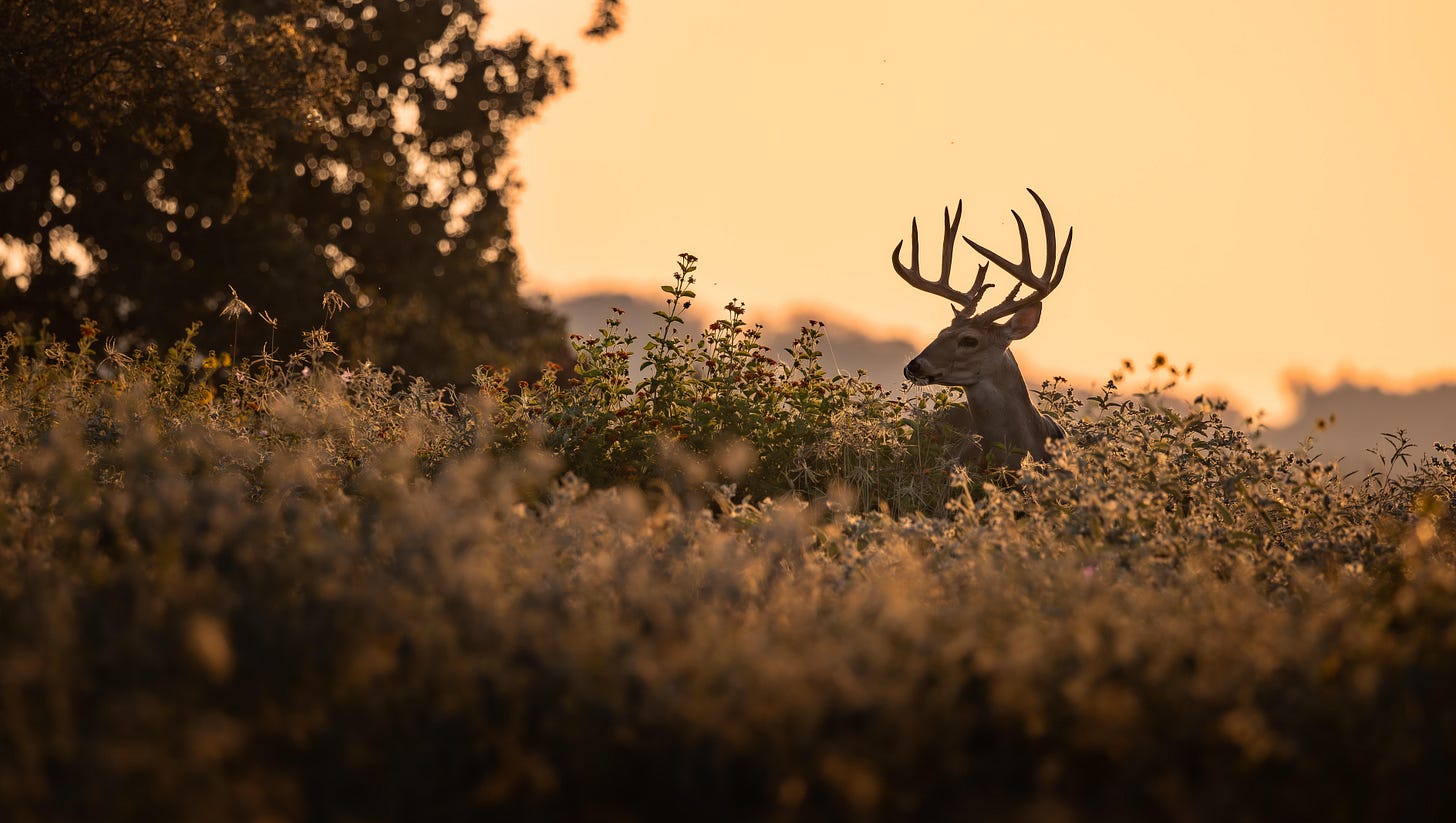
Earlier that day, I met my first, and so far, only samurai. He had been going to Japan for months to train and learn. The conversation stopped me in my tracks, an abnormality in a sea of AI-adjacent chatter. I marveled that anyone could do this, and that this man had. I asked him what had been the hardest thing for him to learn, and he replied, “Think about how you would shoot a deer.” When handed a bow and arrow, we naturally aim, point, and shoot at the target. Yet to hit the deer, he said, you have to become the deer. If you are the deer, you can never miss yourself.
I nodded politely as he spoke, eager to understand, yet the words floated, never quite landing.
As I’ve been feeling better, emerging from the aftermath of stage IV cancer treatments, I’ve been wrestling with the same dynamic. A deep reckoning with your mortality exposes everything that is temporary, clarifying the disconnect between physical comfort and spiritual nourishment.
My life has resumed a normal rhythm. For months, I hesitated to think more than two weeks ahead, yet my fear has slowly loosened. I’ve been eager to move, eager for more space, eager to start something new, eager to be in the world, but it’s as though my shoelaces are tied as I step forward, held back by something unknown.
Yet, I feel like a surfer waiting for a wave, deeply aware of my place in the world. It’s an interesting dichotomy. I know what I want deeply, but I also recognize the bounds of my own ego state. My world is, by default, bound by “I”, an egocentric view of life in which I possess all the emotions and feelings that pass through my sphere.
As I continued my travels, his statement stuck with me, indigestible. For the last month, I’ve had intellectual constipation. I haven’t been able to write. The words that usually flow so easily have become muddled, half unraveled and disorganized, like the bags I still have to unpack.
In my fog, I’ve leaned on every intuition practice I know to confirm I’m heading the right way. Despite my scientific mind, I’ve found comfort in tarot and astrology as I’ve wondered how much of our world lies beyond our human understanding.
As I’ve begun to pull more cards for myself and others, I’ve realized how often different questions lead back to the same longing. Will I be healthy? Will I be successful? Will I find someone? Beneath all the things we want to know about the future, we all just want to be happy and loved.
Bronnie Ware wrote the Top Five Regrets of the Dying after caring for people in hospice. I had read them aloud during my session at the conference, looking out at a sea of nodding faces.
I wish I had the courage to live a life true to myself, not the life others expected of me. I wish I hadn’t worked so hard. I wish I had the courage to express my feelings. I wish I had stayed in touch with my friends. I wish I had let myself be happier.
It all feels so simple when you say it, yet as we debated amongst the group, somehow impossibly hard to put into practice.
A couple of days ago, as I finally flew back home, tarot cards strewn across the plastic tray table before me while strangers slept beside me, the samurai’s words finally landed. Like a hunter seeking a deer, I seek fulfillment, yet I keep placing distance between myself and a fulfilled life. Like becoming a deer, you reach happiness only by becoming happiness, letting that joy infuse your present moment. Joe Dispenza often speaks about embodying this future state: imagine who you want to be and live as that person today.
I’ve also been thinking a lot about how the forms of intelligence we assumed to be pre-eminent are shifting. My muddled thoughts derive from the fact that much of this is unnameable by practice. As AI becomes better at tasks we once presumed, perhaps with some hubris, were distinctly human, I wonder whether being surpassed will help us recognize the forms of intelligence we have neglected.
To live like a deer is to live by sensation, to keep every pore of your body open to the forest’s possibilities and terrors. We have long praised our brains, but we’re starting to recognize our bodies’ collective intelligence. The biologist Michael Levin proposes that intelligence extends beyond brains, to the ways cells and tissues work together toward shared goals. It makes me wonder how much we have overlooked by looking only to the mind. How do we quantify embodied living? Does a deer dream of a future state?
I’ve started telling myself, as I wake up every morning, that this is the best day of my life. Perhaps I’ve had better, more meaningful days, but I will never have another day like this, one that hasn’t been defined yet.
As I walk, seeing the world differently, noticing the colors of the leaves and the shapes of the clouds in the sky, I realize I can’t know what happiness tomorrow will bring. The futures I abhorred imagining have turned into exuberant dreaming, regardless of the outcome.
Somewhere, a deer meanders amongst the trees, silently chewing a blade of grass, its ears attuned to the world around it.